Cell-Grown Hedge Plants: A Guide to Small Hedging Plants
We imagine most people who want a hedge want it yesterday, until the quotes for a mature hedge come back. That is the point where the neighbour's fugly shed is not so bad. This is the usual battle between convenience and budget.
If your inner budgeting voice drowns out your “spend it now” voice, then the smaller but cheaper cell-grown hedging plants are for you.
These are young hedge plants grown in “cells” or plugs full of compost. Basically, tiny pots joined together to form a tray, hence the name cell-grown or plug plants. They can be removed and planted with the roots intact in their compost plug, with very little root disturbance.
You will trade instant impact for low cost.
Who Are Cell-Grown Hedge Plants Best For?
Cell-grown hedge plants are a good choice in several situations.
- They work particularly well for people planting long hedge runs, where the cost of larger plants would quickly add up and the dormant season has passed i.e. no bare-root hedge plant options available.
- They also suit buyers who are working to a tight budget and also outside of the dormant season.
- Cell-grown plants are also practical for beginners. As they are small and lightweight, they are easy to handle, space out and plant. No need to worry about root collar placement, roots being damaged in the lifting and mail out process or roots drying out or damaged whilst in your care.
Advantages of Cell-Grown Hedge Plants
One of the main advantages of cell-grown plants is that their roots remain intact during planting. The plant is transferred to the soil together with its compost plug, which helps avoid the disturbance that can occur with bare-root plants.
Because the plants are young, they often adapt quickly to the soil they are planted into. With good watering and reasonable conditions, they can establish well.
Cell-grown plants also offer a lot more flexibility when it comes to planting. You can plant them any time of the year providing the ground is suitable i.e. not frozen ground, very dry or drought conditions and waterlogged soil. If you are not ready to plant, just leave them outside but don’t let them dry out.
Cost is also important. When planting a long hedge, using smaller plants often makes the project far more affordable. For many buyers, cell-grown plants offer a good balance between price, flexibility and ease of planting.
The Downsides of Cell-Grown Hedge Plants
The main drawback of cell-grown hedge plants is simple: they are small when they arrive.
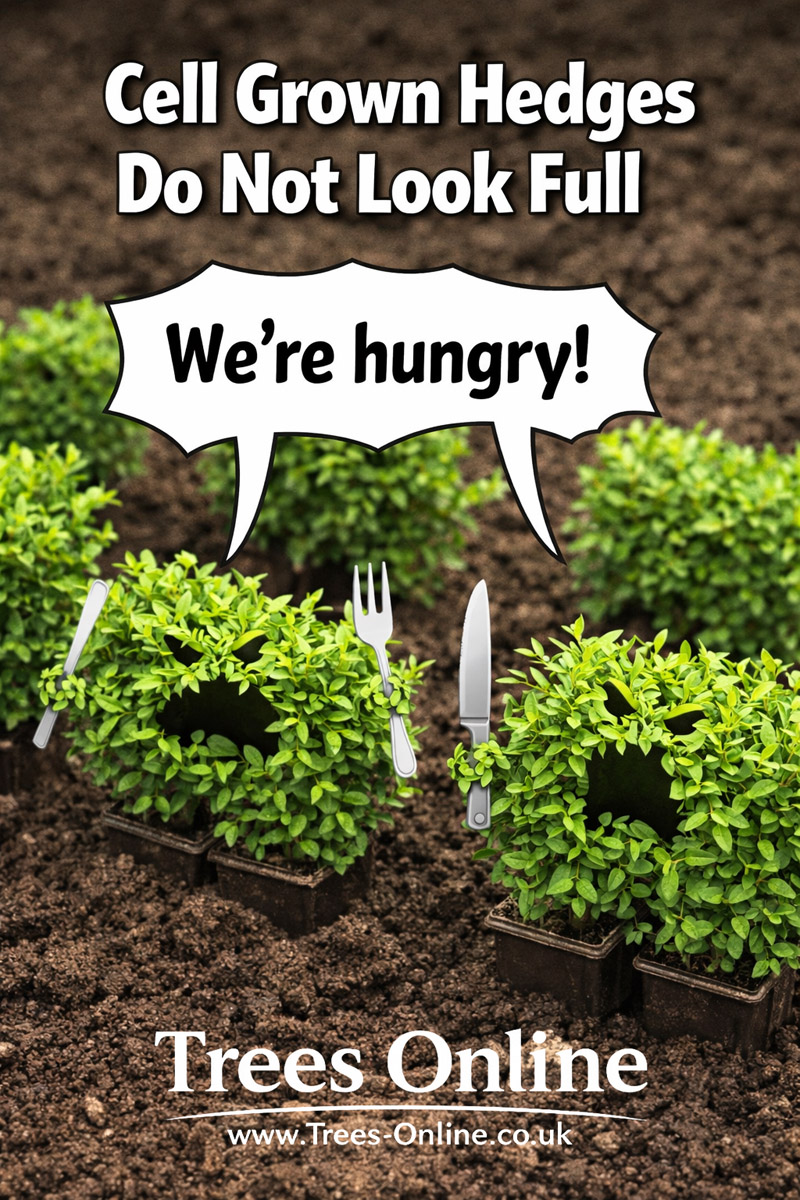
This means the hedge will not look full immediately after planting. The plants may appear sparse at first, and it will take time for them to grow and knit together.
Because they are young, they also require some care in the early stages. Regular watering during the first growing season is important while the plants establish their roots.
Cell-grown plants are therefore not the best choice for anyone wanting an instant screen. If immediate privacy or visual impact is essential, larger hedge plants may be more suitable. If you only want to block out the neighbours ugly footwear choices then a cell-grown hedge is a good choice. If you are looking to block out something above ankle height then you need bigger hedging plants.
For many gardeners, however, the trade-off between cost and patience is perfectly acceptable.
Cell-Grown vs Bare-Root vs Pot-Grown Hedge Plants
Hedge plants are commonly sold in three main forms: cell-grown, bare-root and pot-grown.
Bare-root plants are pulled from the ground during the dormant season (November to March) and supplied without soil around the roots. They are often the cheapest option when in season, but they can only be planted during the same time frame. With climate change, some plants are beginning to leaf up early and artificial cold storage is used to suppress that process. This means you need to get them planted very soon after delivery if you ordered them late in the season. They can range from the 1 year 20-60cm range all the way through to 200cm+. As the roots have been disturbed or even broken from being yanked out of the ground, there is a small element of having to catch up by growing them back. There is also an industry term used in forestry called “beating up”. It means checking which bare-root plants didn’t make it through to the summer, indicating there is an expected failure rate with bare-root plants. The low cost of bare-root can still make it worthwhile.
Pot-grown plants are supplied in pots surprisingly enough. They provide a quicker visual effect but are heavier to handle and generally more expensive. They can be planted all year round, don’t have the roots disturbed as much and have a higher success rate.
Cell-grown plants sit somewhere between the two. They are small and affordable like bare-root plants, but they have the advantage of being grown with their root plug intact.
How to Help Young Hedge Plants Establish and Grow Well
There are several things you can do to help young hedge plants establish and grow well.
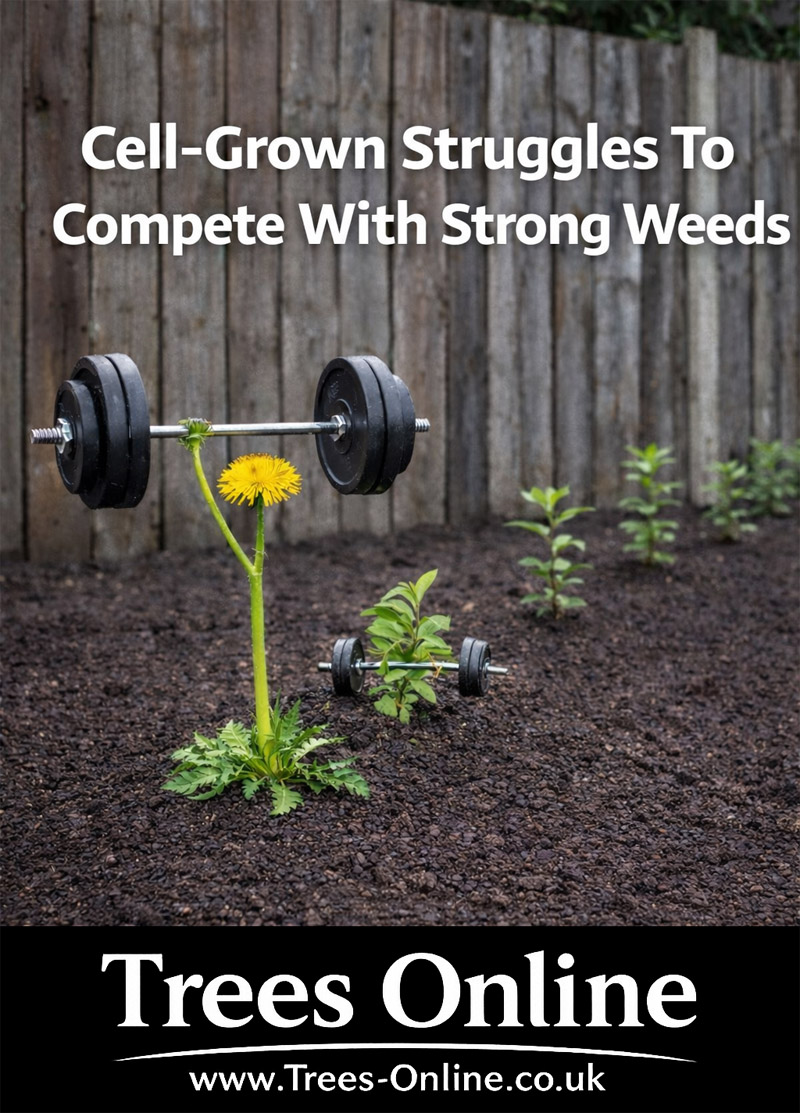
Good soil preparation is one of the most important steps. Removing weeds and loosening the soil helps roots spread more easily and reduces competition from strong weeds that would otherwise take up water, nutrients and light.
Keeping the hedge line free from weeds after planting is just as important. Young hedge plants can struggle if they are surrounded by fast-growing grass or weeds. Mulch, weed suppressant fabric, or regular manual weeding can all help reduce competition and hold moisture around the roots. This is why it is a good idea to suppress weeds.
Watering matters most in the first growing season, especially during dry spells. Small hedge plants do not have large root systems yet, so they can dry out much faster than established plants. Mulch can also help by keeping moisture in the ground for longer.
Light trimming at the right time can encourage bushier growth and this is species specific. Some hedge plants need a trim once a year, others up to three times. If left completely unchecked, some hedge plants will focus more on growing upwards than thickening out. This can leave you with a thicker hedge up top and gaps at the bottom.
Healthy, steady growth is the aim. A well-prepared, well-watered and well-maintained young hedge will usually establish faster and fill out better than one left to compete with weeds and dry soil and left unpruned.
Although cell-grown plants have a high success rate due to the roots not being disturbed, faeces occurs as they say in child friendly circles. It is a good idea to buy 5–10% extra and pot them up to keep as spares or gap fillers especially if you plant a single line of hedging and not a staggered row (two lines of hedging offset to each other to provide a thicker hedge)
Our Hedge Finder Tool
If you would like a little automated help finding the right cell-grown hedge plant for you then our Hedge Finder Tool can help. Find it here https://www.trees-online.co.uk/Before-Buying/Hedges/Find-your-hedge-tool
Helpful Links
RHS pruning hedges guide. https://www.rhs.org.uk/plants/types/hedges/pruning-hedges
RHS How to Grow Hedges https://www.rhs.org.uk/plants/types/hedges/growing-guide
Woodland Trust How to Plant and Maintain Hedges https://www.woodlandtrust.org.uk/plant-trees/managing-trees-and-woods/hedge-planting-and-maintenance/